What is a circular economy?
Not everything we throw away is waste.
By using your FOGO and recycling bins, food scraps, garden waste and recyclables can be turned into valuable new resources instead of ending up in landfill.
A circular economy keeps resources in use for longer and reduces waste.
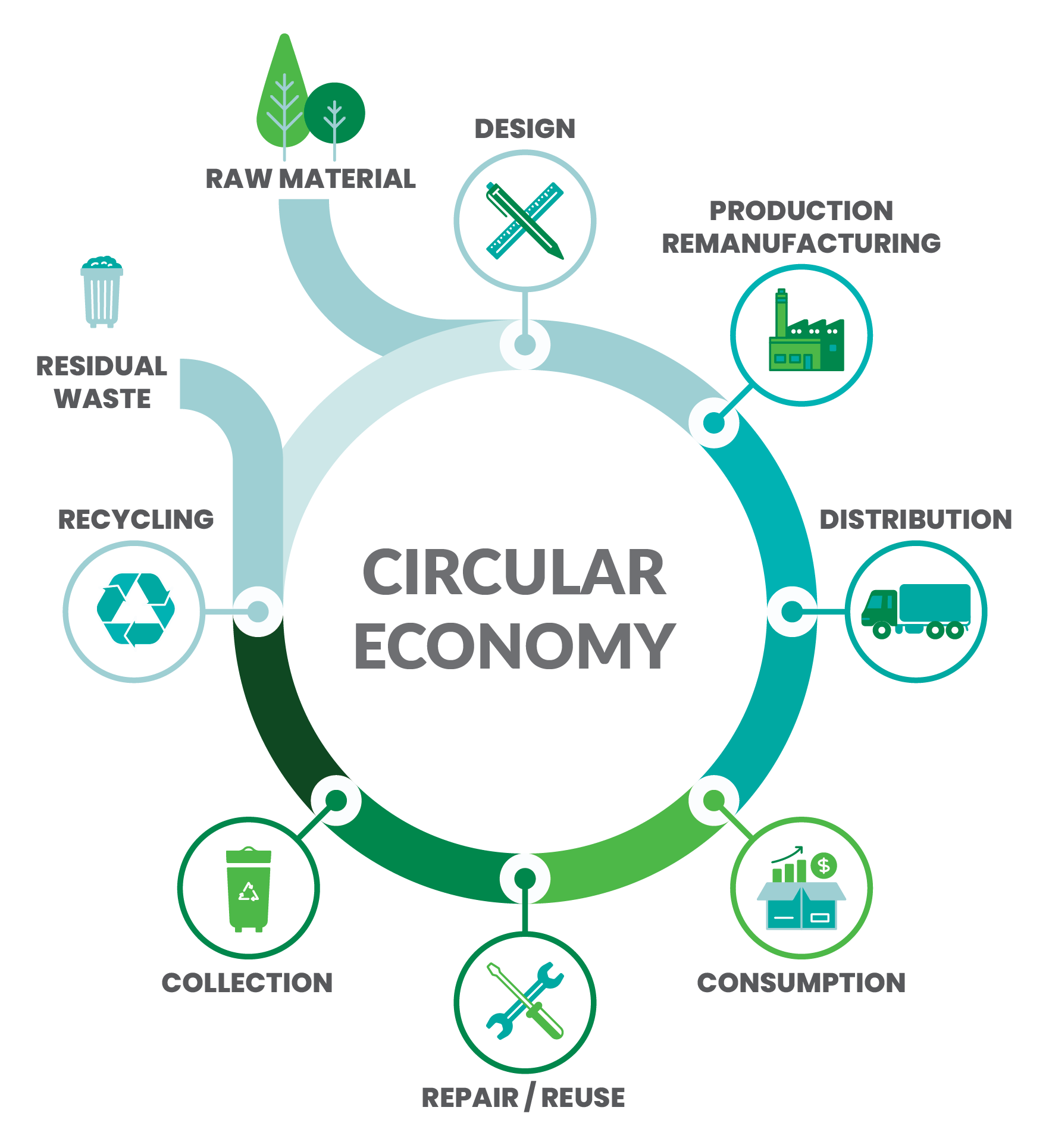
Resource recovery is the process of collecting and reusing materials that would otherwise go to landfill.
For example, items placed in your recycling bin, such as paper, glass, plastic and aluminium, are sent to a recycling facility where they are processed into new materials for manufacturing. Your food and garden organics are taken to Shellharbour's commercial composting facility, where they are broken down into nutrient-rich compost that can be used to improve soil.
The goal of 'zero waste' is to avoid sending products to landfill. This might look like recycling or composting what you can, or repairing or donating old items rather than throwing them away.
More than that, moving towards zero waste means considering the lifespan of a product when you first buy it. It's about cutting out products that are only intended to be thrown out (such as single-use plastics) or choosing products that can be easily reprocessed into something new (like choosing aluminium cans over plastic bottled drinks, since aluminium is infinitely recyclable).
Achieving zero waste requires action from everyone, including manufacturers, governments, businesses and the community. Industry has an important role in designing products that use fewer resources, last longer and can be easily recycled or reused. As innovation continues, materials that were once destined for landfill are increasingly being recovered and transformed into valuable resources. We've come a long way, but there is still plenty of work to do to reduce waste and keep materials circulating in our economy.
Council owns and operates Dunmore Recycling and Waste Disposal Depot (DRWDD). Once your FOGO bin is collected, your organics are then reprocessed into compost at Dunmore's own FOGO reprocessing facility. Once your red-lid bin is collected, it is transported to Dunmore landfill and nothing is recovered.
When your yellow lid recycling bin is collected, your recycling is taken to a big shed (transfer station) in Kembla Grange. The material is then transported to a giant factory in Sydney called the Materials Recycling Facility, where recycling is made back into paper, new containers and other various new products.
Based on the amount of rubbish that Shellharbour currently sends to landfill, Dunmore will reach capacity in 2058. Landfill takes up lots of space, is expensive to maintain and continually damages the environment as it breaks down over time. This is one of the reasons we want to send less products to landfill.
Everything in your red-lid bin heads straight to Dunmore landfill. We want to encourage Shellharbour residents and businesses to sort through rubbish properly, so more ends up in your FOGO and recycling bins, and less ends up in landfill.
If fortnightly collections don't work for you and your household, there are other options available - check out our additional services.
Why isn't this service included in my rates?
It's a common misconception that our neighbouring Councils have bulk kerbside collections for 'free'. This is not the case - the cost of kerbside collections are absorbed in their rates.
At Shellharbour Council, our kerbside collections are on-call, meaning you need to book and pay for a collection - this cost is not absorbed in our rates.
We do this because it means you're only paying for the service when you need it.
Dunmore Recycling and Waste Disposal Depot is home to several facilities that are dedicated to recovering resources and diverting waste from landfill. These include:
- Reviva Centre (tip shop)
- Food Organics and Garden Organics (FOGO) Processing Facility
- Resource Recovery Centre where you can drop off household problem waste for specialised recycling, free of charge. Check out what items you can drop off.
- The Tinkerage; a community space for repairing and upcycling
The Shellharbour LGA diverted approximately 53.5% of waste from landfill in 2022/23. We want to see this percentage on the rise!
What happens to waste now?


Step 4: After your green-lid bin is collected, food scraps and garden waste are processed at a FOGO facility and turned into useful compost.
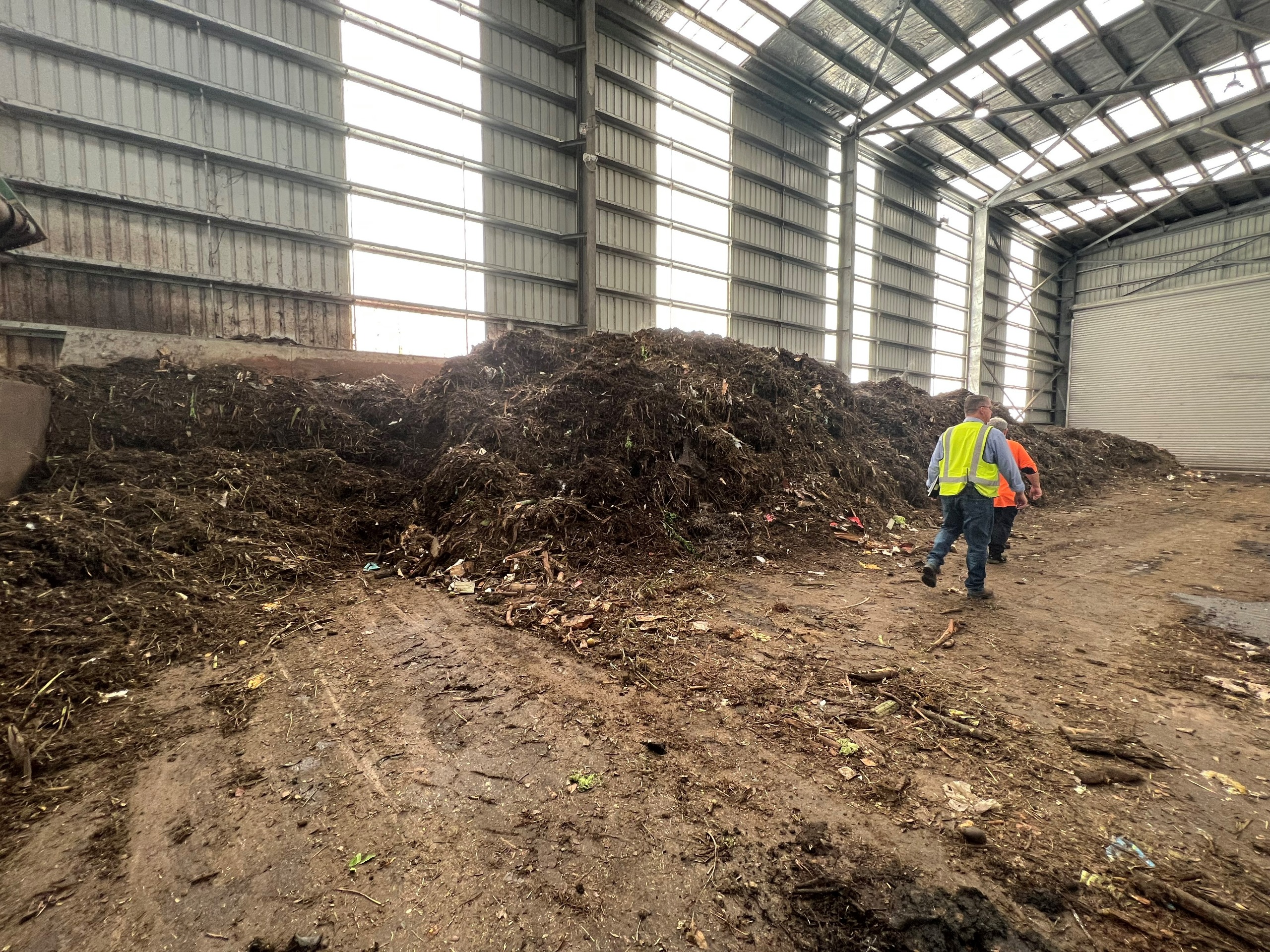
Step 5: After your yellow-lid bin is collected, recycling is taken to Kembla Grange, then sorted in Sydney and sent off to become new products


Let's get waste sorted together!
What circular economy programs suit you?
This poll has concluded.
- 💻 Hands-on repair, reuse, and repurpose 100% (1 vote)
- ♻️ More community recycling opportunities 0% (0 votes)
- 🥬 Community access to FOGO compost products 0% (0 votes)